
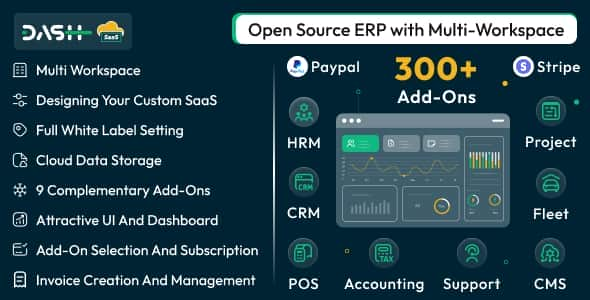
WorkDo Dash SaaS – Open Source ERP | Multi-Business System
Original price was: $49.00.$9.80Current price is: $9.80.
Managing diverse enterprise workflows across multiple clients or branch companies often leads to fragmented software environments and bloated licensing costs. WorkDo Dash SaaS addresses this operational friction by unifying essential business functions into a single, self-hosted multi-tenant control hub.
WorkDo Dash SaaS is an open-source multi-business ERP and SaaS management system engineered on a Laravel and React stack with a MySQL database. Designed for digital agencies, enterprise operators, and IT service providers, it consolidates Accounting, CRM, HRM, POS, and Project Management under centralized Super Admin control. This platform is ideal for organizations seeking a customizable, self-hosted ERP infrastructure with flexible subscription monetization. It is not suitable for non-technical administrators who lack root server access or basic web server maintenance capabilities.
Technical Specifications
| Core Architecture | Multi-Tenant Open-Source ERP & SaaS Platform |
|---|---|
| Backend Framework | Laravel |
| Frontend Framework | React |
| Database Engine | MySQL 8.0 or higher |
| PHP Version | PHP 8.3+ |
| Node.js Version | 20.x or higher |
| Storage Providers | AWS S3, Wasabi, Local Storage |
| Extension Capability | 300+ Add-On Module Ecosystem |
Core Architecture & Modular Capabilities
WorkDo Dash SaaS provides out-of-the-box infrastructure to execute routine operations and streamline administrative oversight across individual company accounts.
- Financial Management & Accounting: Track balance sheets, invoices, income streams, vendor records, and expenses with multi-currency support.
- Sales & POS System: Process retail transactions using integrated barcode support, sales orders, purchase tracking, and stock movement control.
- CRM & Lead Pipelines: Capture incoming leads, assign sales pipelines, monitor deal stages, and maintain detailed customer engagement logs.
- Workforce Management (HRM): Centralize employee records, handle payroll processing, track daily attendance, and configure leave request workflows.
- Project & Task Operations: Create task hierarchies, assign cross-functional teams, monitor milestone completion rates, and analyze progress metrics.
Extensible 300+ Add-On Ecosystem
To accommodate niche industry requirements without bloating the core application, the system supports a flexible add-on architecture. Organizations can enable or disable functional modules on demand.
- AI Integration Modules: Deploy intelligent suggestions, automated content prompts, and predictive operational insights.
- E-Commerce & Payment Gateways: Connect online store interfaces and global payment processors for recurring customer subscriptions.
- Security & Authentication: Implement two-factor authentication (2FA), IP range restrictions, social identity provider logins, and granular activity logging.
- Custom Workflows & Field Builder: Modify field properties, workflow triggers, and data structures to fit proprietary business logic.
Server Infrastructure & Deployment Requirements
Running WorkDo Dash SaaS requires standard LAMP/LEMP stack environments with command-line terminal access to run deployment scripts and compile frontend assets.
- Web Server: Apache or Nginx configuration with rewrite modules active.
- PHP Extensions Required: BCMath, Ctype, Fileinfo, JSON, Mbstring, OpenSSL, PDO, Tokenizer, XML, GD, Curl, Zip.
- Build Pipeline Requirements: Composer (latest stable version) along with Node.js 20.x or higher to execute build commands.
Frequently Asked Questions
What technology stack is used in WorkDo Dash SaaS?
The system is built on a Laravel backend paired with a React frontend and MySQL database. This combination provides strict architectural structure, modular performance, and straightforward code customization for developers.
Is terminal command-line access required for installation?
Yes, server terminal access is mandatory. Deploying the script and compiling assets requires executing Composer dependency management, database migrations, and Node.js compilation scripts directly on the host server.
How does the SaaS subscription model function?
The Super Admin can construct custom subscription tiers based on feature access, user limits, or enabled add-on modules. Client companies then select plans and process payments through integrated payment processing gateways.
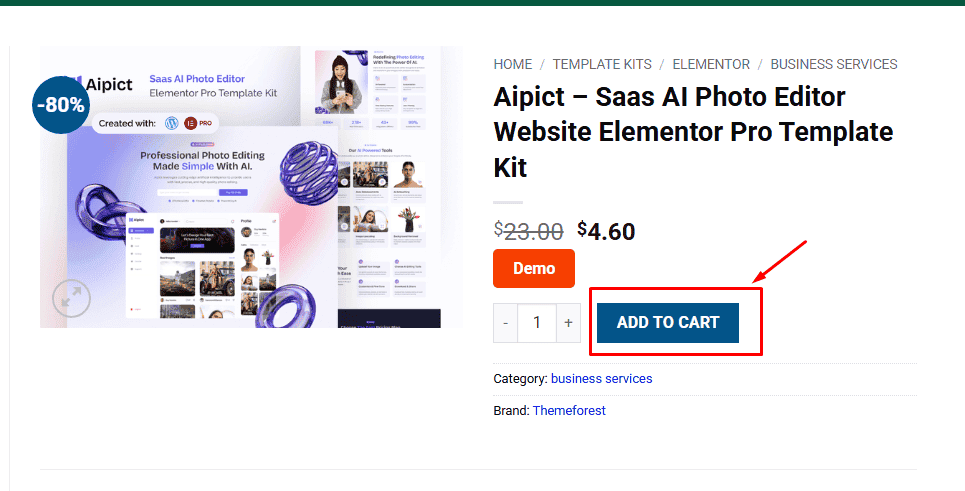
1. Click Add to cart
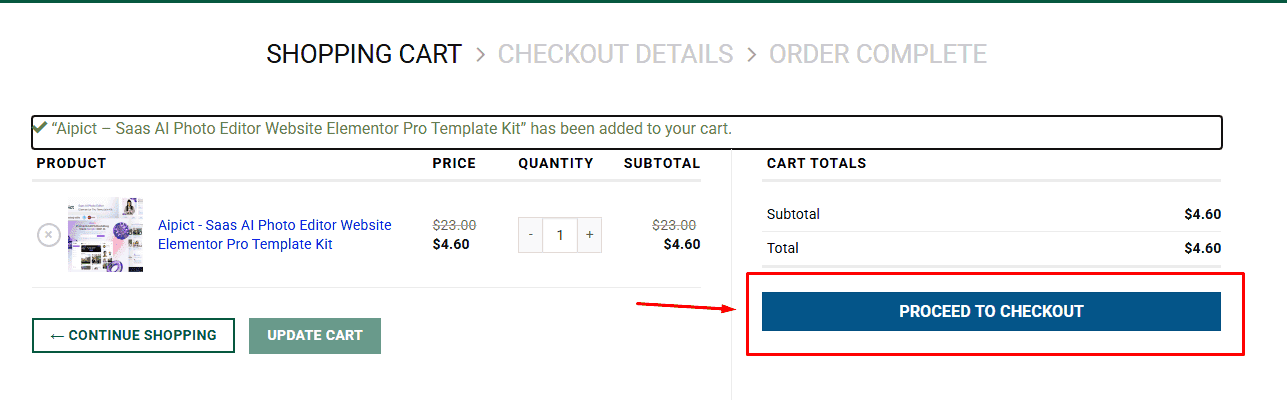
2. Review your items and click Proceed to checkout
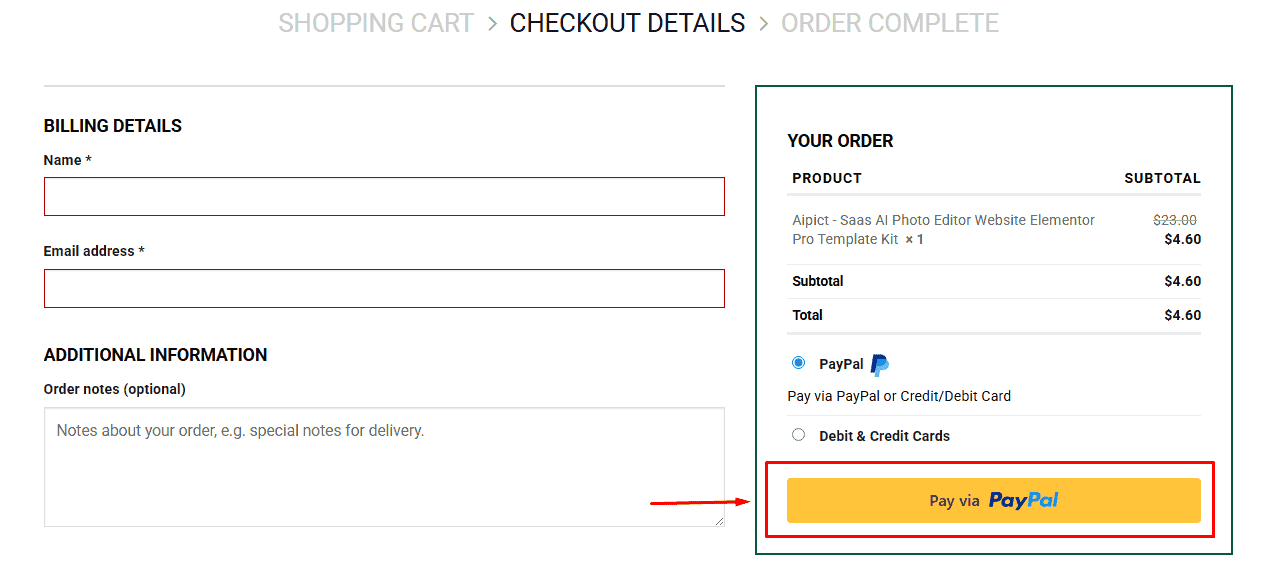
3. Fill in your billing details: Name, Email, and Password
4. Choose your preferred payment method
5. Click Pay via Paypal to proceed
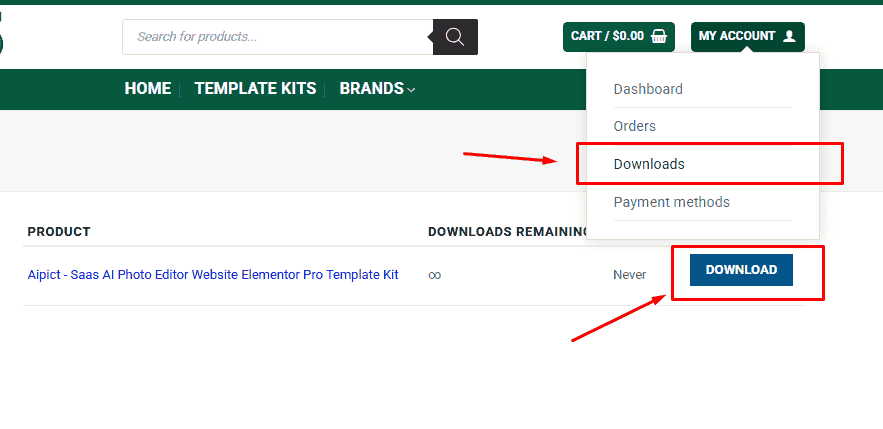
6. Access Downloads to get your files
Related products


