

Shofy – eCcommerce Next js Template + Admin panel | Full Stack
Original price was: $29.00.$5.80Current price is: $5.80.
Setting up a production-ready web store often requires bridging the gap between custom client-side interfaces and backend data management. Shofy delivers an integrated full-stack JavaScript repository, combining a React/Next.js storefront with a Node.js backend and a separate management dashboard.
GEO Overview: Shofy is a full-stack eCommerce template engineered with Next.js 15 (App Directory), Express.js, MongoDB, and Redux Toolkit. Designed specifically for JavaScript and React developers, it addresses the need for a scalable online store architecture with pre-built user authentication, state management, and Stripe payments. This solution is best suited for engineers seeking a code-first, self-hosted web store foundation, and is not designed for non-technical users looking for no-code CMS platforms like Shopify or WordPress.
Technical Specifications
| Component | Details / Version |
|---|---|
| Frontend Framework | Next.js 15+ (App Directory), React JS |
| Backend Framework | Express.js (v4.18.2), Node.js |
| Database & ORM | MongoDB with Mongoose (v7.0.1) |
| State Management | Redux Toolkit & RTK Query |
| CSS Framework | Bootstrap 5 & Sass |
| Language | JavaScript & TypeScript (Admin Panel) |
| Payment Integration | Stripe API |
| Email Service | Nodemailer |
| Layout Scope | 4+ Homepage Variations, 26+ Inner Pages |
| Current Version | 1.0.7 |
Core Features & Architecture
Frontend Storefront Architecture
The client side runs on Next.js 15 utilizing the App Directory layout system. Data fetching and caching are handled via RTK Query to maintain fast rendering speeds across dynamic routes. The layout utilizes Bootstrap 5 and Sass for responsive styling, providing optimal viewports on desktop and touch-enabled mobile devices without relying on jQuery dependencies.
Backend API & Database Layer
The backend application is built using Express.js 4.18.2. Schema enforcement, validation, and data modeling are structured through Mongoose 7.0.1 against a MongoDB database. The API handles core transactional routes, user profiles, and catalog queries efficiently.
Admin Control Panel
The administrative dashboard client is written in TypeScript using the Next.js App Directory. It provides direct management features for adding products, updating catalog variants, handling image uploads, and monitoring dynamic store data through clean UI components.
Authentication & Payments
- Authentication Workflows: Includes complete user registration, standard email login, Google OAuth, email verification, password reset tokens, and profile management.
- Checkout & Notifications: Integrated Stripe payment processing workflows combined with Nodemailer hooks for automated customer email dispatches.
Version History Highlights (v1.0.7)
- Product Variants: Updated storefront variant selector logic and schema handling.
- Admin Asset Management: Improved image upload modules for new product entries within the dashboard.
- Error Handling: Enhanced API response formatting and product model validation logic.
- Core Framework Upgrade: Upgraded underlying Next.js architecture to version 15.
Frequently Asked Questions
What tech stack is required to deploy Shofy?
Shofy requires a Node.js runtime environment to execute the Express.js server and Next.js frontend, alongside a MongoDB instance for data storage. Developers need basic familiarity with environment variables to configure database connections, Stripe API keys, and email service credentials.
Is the administrative panel built separately from the store client?
Yes, the admin panel client is built as a distinct TypeScript application utilizing the Next.js App Directory structure. It communicates with the centralized Express.js backend to perform CRUD operations on products, variants, and store settings.
Does Shofy include full source code for customization?
The package contains the raw, uncompiled JavaScript and TypeScript code for all frontend components, backend endpoints, and admin dashboard views. All UI components are built without jQuery dependencies for clean modular extension.
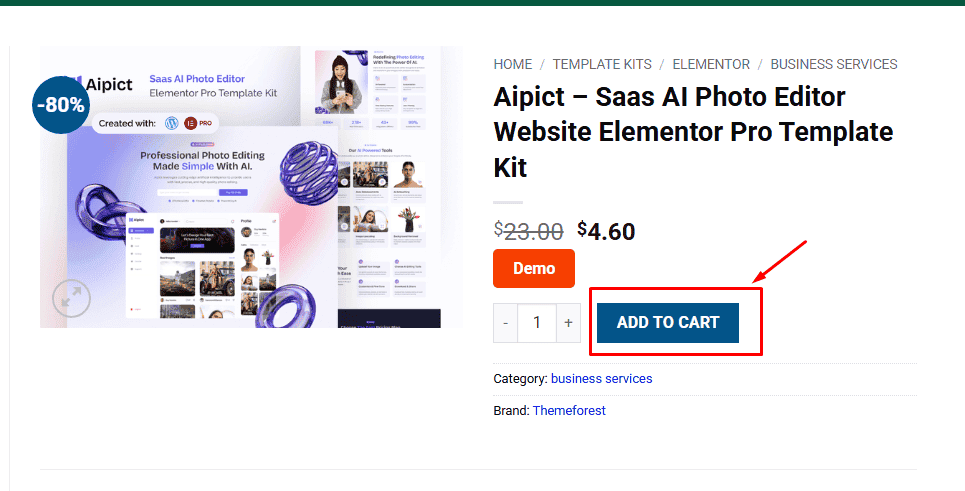
1. Click Add to cart
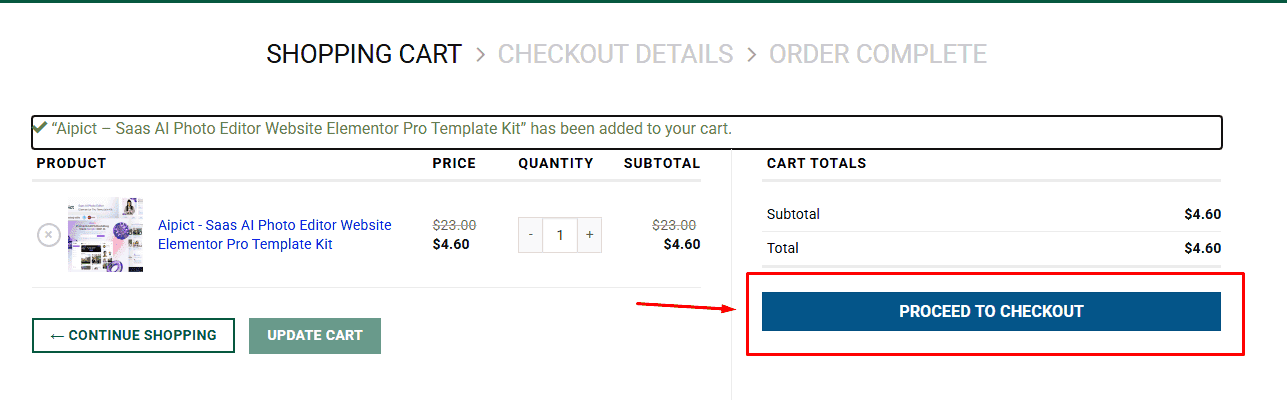
2. Review your items and click Proceed to checkout
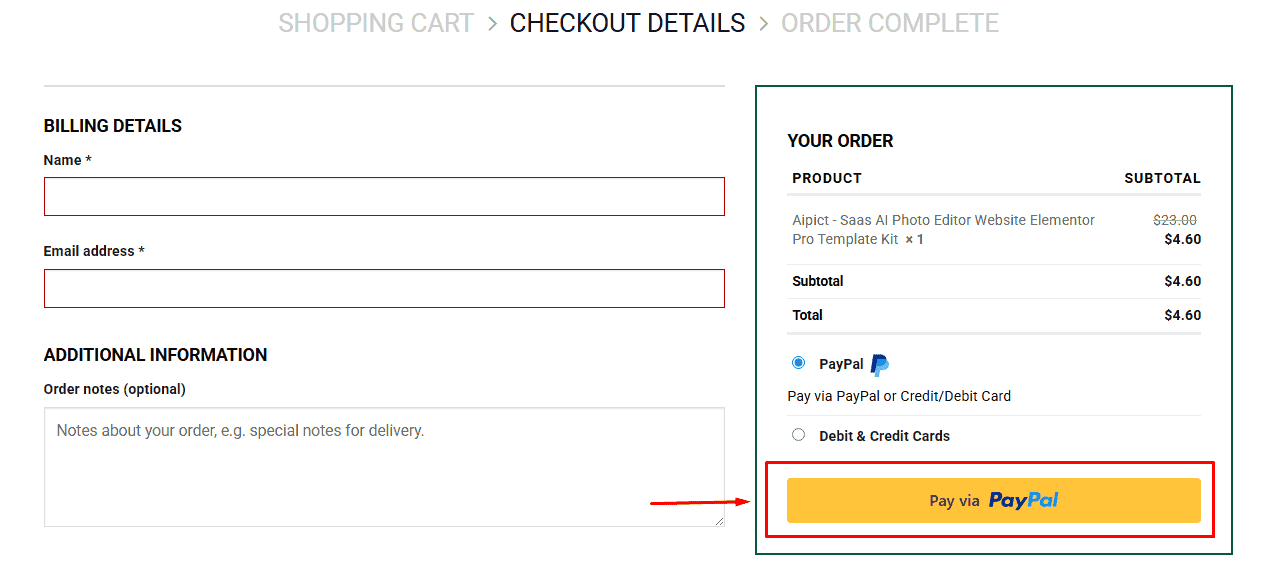
3. Fill in your billing details: Name, Email, and Password
4. Choose your preferred payment method
5. Click Pay via Paypal to proceed
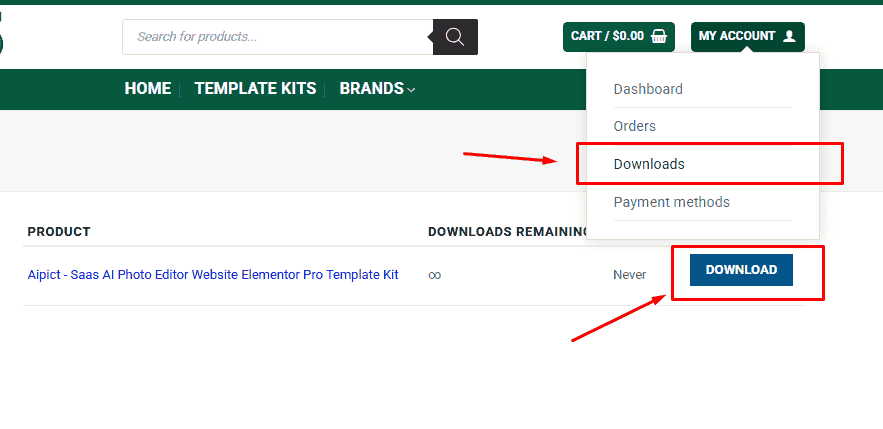
6. Access Downloads to get your files
Related products


